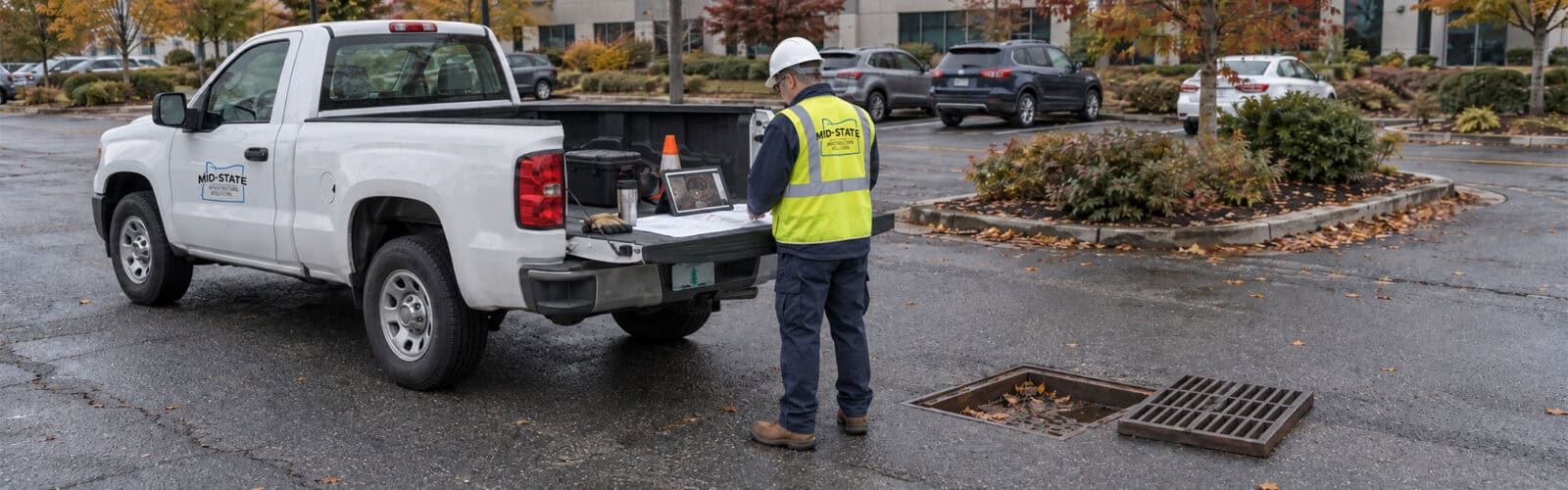
Scheduling catch basin cleaning is a useful first step before fall rain. To get the most from that visit, identify the right drains, make them accessible, and know what needs attention after the truck leaves.
A practical stormwater maintenance checklist connects five tasks: identify problem areas, choose the appropriate service, prepare the property, record the work, and follow up on unresolved conditions. For Oregon property managers and facility teams, this approach turns a seasonal cleaning into a documented maintenance effort that supports the site’s stormwater program.
Use the steps below to prepare for service and keep the work organized through the wet season.
1. Identify which drains need attention
Start with your property’s existing maintenance plan, inspection notes, and previous service records. Note which catch basins have a history of sediment buildup, blocked grates, or ponding after rain. Areas beneath trees or near active construction may need particular attention as conditions change.
Create a simple site map or marked photo showing the structures you want assessed. Use consistent labels, such as “north parking lot drain” or an existing asset number, so your team and the cleaning crew can refer to the same location.
If you do not know when a basin was last cleaned, include that in the service request. The EPA’s storm drain system cleaning guidance describes using inspections and a drainage inventory to prioritize work. Our catch basin cleaning guide provides more background on the structures and cleaning process.
2. Match the service to the condition
Catch basin and storm drain cleaning addresses accessible sediment and debris inside drainage structures. It is a logical starting point when routine accumulation is the concern. Explain what you have observed so the crew can review the scope before arrival.
If a basin has been cleaned but water still drains slowly, the problem may extend into connected piping. Drain line jetting can loosen buildup inside accessible lines for recovery. Recurring or unexplained blockages may also call for a camera inspection to document visible pipe conditions. Our article on CCTV storm and sewer line inspection explains when that closer look is useful.
Include surface maintenance in the plan where leaves and loose sediment are collecting near inlets. The EPA recognizes parking lot and street sweeping as a stormwater best management practice that can reduce pollutants available to wash into drains. See why sweeping and storm drain cleaning work together for the connection between those two tasks.
An active backup needs a different response from routine seasonal cleaning. Tell the service team if the property is flooding or requires a specific appointment, so scheduling reflects the actual need.
3. Prepare the property before the crew arrives
A clear service request helps the crew understand both the work and the access conditions. Share:
- The property address, approximate drain count, and marked drain locations.
- Gate instructions, access hours, and an onsite contact.
- Parked vehicles, equipment, or other obstacles that may block the structures.
- Known drainage problems and any concerns about the material being removed.
- Any service records, photographs, or reporting details your team needs.
Coordinate access with tenants or onsite staff before the scheduled visit. Confirm which structures are included and how the crew will handle additional work if it finds conditions beyond routine cleaning. This is especially useful when arranging service across several properties: each location should have its own drain list and contact information.
For route-based promotional service, scheduling flexibility is part of the offer. Review the route terms before signing up so your property’s access arrangements fit the service.
4. Keep a record that connects the work to the location
A useful maintenance record should tell your team what was serviced, when it happened, and what remains to be addressed. Ask which details will be available before the work begins.
Keep the service date, drain identifiers, work description, and relevant crew observations together. Add photographs or camera inspection reports when they are part of the agreed service. Record structures that could not be accessed, along with the reason, so you can reschedule them.
For example, a record might show that the north parking lot basin was cleaned, but drainage remained slow, and a pipe inspection was recommended. That gives the property team a specific next step. A general invoice for “drain cleaning” may not capture the same information.
Using the same location labels in your map, service request, and maintenance file makes it easier to compare findings at the next visit.
5. Follow up on findings and adjust the schedule
Review the service record with the person responsible for property maintenance. Assign any follow-up work and record when it is completed. A damaged grate, an inaccessible basin, and a recurring pipe blockage need different next steps.
Continue the inspections required by your site’s plan or permit, and note whether the same areas collect debris or drain poorly again. Use those observations to refine the maintenance schedule. Fall leaf accumulation, site activity, and previous drainage problems can affect how quickly conditions change; one seasonal visit does not establish the right frequency for every property.
If cleaning repeatedly addresses the same symptom, share that history when requesting further assessment. Knowing where the problem returns can help focus the next inspection or service visit.
How this checklist supports stormwater compliance
Maintenance and documentation help demonstrate the work completed under a stormwater program. They also help identify outstanding problems that need action. A cleaning record alone does not establish compliance with every requirement.
The EPA stormwater program covers certain municipal, construction, and industrial discharges. Requirements vary by site, permit, and local program, so your property team or permit administrator should confirm the inspection, maintenance, monitoring, and reporting obligations that apply.
For industrial facilities, our Oregon industrial stormwater permit article provides background, and Oregon DEQ’s industrial stormwater resources provide the official permit information. Mid-State supports the field maintenance and service documentation within the agreed scope of work.
Lane County fall cleaning offer
Mid-State is offering cleaning for $59 per qualifying standard parking-lot drain or catch basin in Lane County. Submit your property by November 15, 2026. Cleaning includes vacuum removal, power washing of accessible basin surfaces, a visual check, surrounding cleanup, and a service record.
We group nearby properties and choose the route date and time, with advance notice. Eligibility and service depend on property conditions and route demand; requesting by the deadline does not guarantee cleaning by that date. Fixed appointments and urgent or emergency work use standard rates. Drain-line jetting, CCTV inspection, repairs, and special conditions are not included in this promotion.
You can also receive 20% off your first parking-lot sweep when starting recurring service at least monthly. Request this offer by November 15, 2026; one-time sweeping is excluded, and recurring service is quoted separately.
Review the full offer and request Lane County route service. For other Oregon locations or scheduling needs, contact Mid-State Industrial Service or call (541) 726-6730.