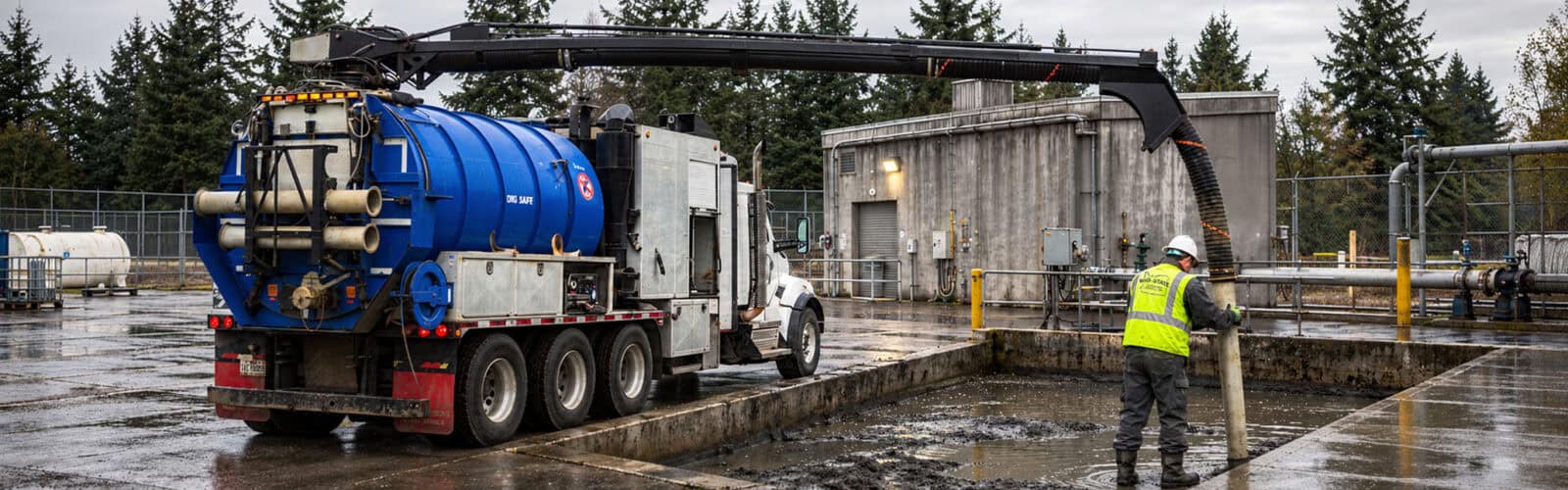
Picture a maintenance crew ready to start work—with a trench full of sawdust standing in the way. At another facility, sludge has accumulated in a sump. On a construction site, loose material and slurry must be removed before the next phase can begin.
Different materials. Different locations. The same practical problem: getting the material out of the way so work can move forward.
This is where industrial vacuum services earn their place on the job. With equipment designed for both wet and dry material removal, Mid-State Industrial Service helps Oregon businesses recover accumulated material from production areas, pits, trenches, tanks, and other challenging locations.
What is wet and dry industrial vacuum removal?
Industrial vacuum removal uses powerful suction to draw material through a hose into a truck’s collection system. Depending on the equipment and material, that can mean recovering dry sawdust, loose solids, thick sludge, or standing liquids.
The distinction from hydro excavation is straightforward: hydro excavation uses pressurized water to break up soil for digging. The work described here focuses on removing material that is already loose, accumulated, or ready for recovery.
For suitable dry materials, removal can happen without adding excavation water. For wet materials, it means collecting liquids and accumulated solids for controlled handling.
Our industrial vacuum services in Oregon support projects where material needs to be recovered before maintenance, repairs, cleanup, or construction can continue.
Dry material removal: when a shovel becomes a logistical problem
A pile beside an open loading area is one thing. Material at the bottom of a narrow trench or tucked into a restricted production area presents a different challenge.
Consider a mill preparing for maintenance. Sawdust and wood fiber have collected in an area that crews need to access. Manual removal could involve repeatedly scooping, carrying, and transferring material through a limited workspace.
Where site conditions allow, a vacuum hose provides a direct collection route from the accumulation to the truck.
Dry-material applications can include:
- Sawdust and wood fiber recovery at mills and processing facilities.
- Removing loose sand, gravel, and soil from accessible work areas.
- Recovery of approved pellets, granules, and other bulk process materials.
- Removal of suitable spent filter media and production residue.
Material suitability matters, especially with fine dust. OSHA’s woodworking guidance identifies dust housekeeping as an important part of controlling fire and explosion hazards and emphasizes equipment appropriate for the work environment. For a cleanup project, understanding the material and matching the recovery equipment are essential parts of planning.
Wet material removal: getting to what is underneath
Wet cleanup often involves more than the liquid visible on the surface. Sediment, sludge, and settled solids may remain underneath it.
Think about a sump that needs inspection. Recovering the standing liquid is one part of the job; removing the accumulated material below it may be necessary before the maintenance team can assess the structure or reach the equipment.
Industrial vacuum recovery can support:
- Sludge and sediment removal from accessible pits and sumps.
- Slurry and wet debris cleanup in construction work areas.
- Recovery of accepted process liquids and maintenance residue.
- Removing standing water from suitable flooded or contained areas.
Guzzler describes industrial vacuum applications that include liquid, slurry, and thick-sludge recovery, along with removal of accumulated material from difficult-to-access locations.
The useful question when planning service is what needs to be removed for the next task to happen. An inspection, repair, or equipment replacement may each require a different cleanup scope.
Why access can matter as much as volume
A relatively small amount of material can create a substantial cleanup job when it is difficult to reach.
Before scheduling removal, consider the path between the material and the collection truck. Is the accumulation below floor level? Inside a structure? Beyond a narrow access opening? Will the hose need to pass around equipment or through an active work area?
Mid-State’s Guzzler and Guzzcavator vacuum trucks support wet and dry recovery, including applications where hoses allow collection beyond the truck’s immediate parking location.
That flexibility is useful, but the setup still needs to fit the site. Hose distance, vertical lift, material characteristics, and available access all influence how the work is planned. Where remote recovery is feasible, it may also reduce the need for personnel to enter the collection area. Any required confined-space entry needs its own assessment and controls.
The equipment matters—and so does the removal plan
Wet and dry capability gives a contractor options. Knowing how to apply those options is what makes the service useful.
Our fleet includes Guzzler industrial vacuum trucks and dual-purpose Guzzcavator units. The Guzzcavator manufacturer’s specifications describe industrial vacuum recovery capabilities spanning dry bulk powders, solids, liquids, slurries, and thick sludge.
For the customer, the goal is a workable plan from collection through unloading. Three details deserve attention early:
1. Identify the material.
“Sump waste” or “mill debris” is a starting point. The source, moisture content, particle size, and any known contamination help determine equipment compatibility and handling needs.
2. Define the finished condition.
Explain what happens after removal. Does a crew need access to a valve? Does the next construction step require clearing the trench first? Agreeing on the intended result helps establish a useful scope.
3. Confirm where the material will go.
Recovery, reuse, and disposal require different arrangements. You may need receiving-facility approval or material testing before hauling begins. Oregon DEQ’s waste-determination guidance explains how process knowledge and testing help establish the appropriate waste classification.
Working through these details ahead of time helps avoid a situation where material is ready to leave the site, but its destination is unresolved.
When should you schedule vacuum removal?
A good time to evaluate material removal is when you schedule the work that depends on it.
If a shutdown requires access to a pit, include pit cleanup in the preparation. If a repair depends on reaching equipment beneath accumulated material, arrange recovery before the repair crew is ready to begin.
For recurring buildup, keep a simple record of where it collects, how quickly it returns, and what work it interrupts. Those observations can help you establish a more useful maintenance schedule and describe the next job accurately.
Wet and dry material removal across Oregon
Mid-State Industrial Service provides industrial vacuum recovery for mills, manufacturers, contractors, municipalities, utilities, and commercial facilities throughout Oregon.
Whether the job involves dry bulk material, sawdust, sludge, slurry, sediment, or accepted liquids, we can review the material, access, volume, and handling requirements to determine an appropriate approach.
Call Mid-State at (541) 726-6730 or request a vacuum-service quote. Share what needs to come out, where it is located, and what happens next. For urgent needs, 24/7 emergency dispatch is available; response timing depends on location, equipment availability, and site conditions.