




Dig Smarter. Dig Safer.
Utility markings identify an approximate location, not the exact depth and position of every buried line. Gas lines, electrical conduit, fiber optic cable, water mains, and other infrastructure can vary from available records and surface markings. Hydro excavation provides a controlled way to expose and verify utilities before mechanical excavation, boring, repair, or construction begins.
Mid-State Industrial Service provides hydro excavation, utility daylighting, and potholing throughout Oregon. Our crews use controlled water pressure to loosen soil and industrial vacuum equipment to recover the resulting slurry, exposing buried utilities and subsurface structures with less reliance on mechanical excavation near the line.
By reducing the need for mechanical digging directly around marked utilities, hydro excavation helps contractors verify underground conditions with greater control and a lower risk of damaging buried infrastructure.
Hydro excavation can also support CCTV storm sewer inspection projects by exposing buried structures, vaults, cleanouts, and utility crossings when access points must be located or uncovered before inspection.
What Is Hydro Excavation?

Hydro excavation uses controlled water pressure to loosen soil and industrial vacuum equipment to remove the resulting slurry. This process can expose buried utilities and structures with less direct mechanical contact than traditional excavation, helping reduce the risk of cutting, crushing, or displacing underground lines.
When introducing water is not appropriate for the site or material, vacuum excavation may be available as an alternative. Mid-State can review soil conditions, material characteristics, utility type, access, project specifications, and site requirements to help determine the appropriate excavation method.
Hydro excavation may be appropriate when:
- You’re working near buried gas, electric, telecom, fiber optic, or water utilities.
Hydro excavation is commonly used for utility daylighting, potholing, and verification before boring, trenching, or mechanical excavation begins. Controlled water pressure and vacuum recovery help reduce direct contact with buried infrastructure. - You need precise excavation in tight, congested, or sensitive work areas.
Suitable for utility crossings, intersections, urban corridors, industrial facilities, and congested underground environments where controlled excavation and minimal surface disruption matter. - Ground conditions make traditional mechanical excavation risky or inefficient.
Hydro excavation can be used in compacted soil, clay, rocky material, frozen ground, and areas with uncertain utility depths. Still evaluate soil conditions, excavation depth, access, water accumulation, and worker-entry requirements before work begins.

- Your project specifications, municipality, or utility owner may require it.
Utility owners, municipalities, engineers, and project specifications may require potholing or non-mechanical utility exposure before excavation, boring, connection work, or infrastructure repairs proceed. - You’re working in paved, landscaped, or finished areas where minimizing damage is important.
The controlled excavation area can limit unnecessary disturbance around asphalt, concrete, sidewalks, curbs, landscaping, and other finished surfaces, potentially reducing the amount of restoration required.
Vacuum Excavation vs. Hydro Excavation
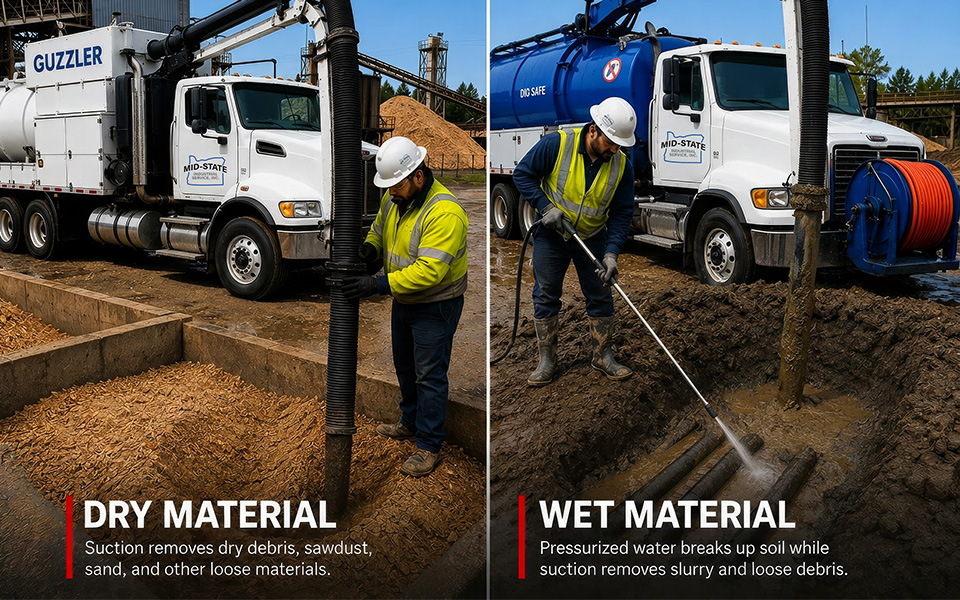
Both services use industrial vacuum trucks, but they solve different problems:
- Hydro Excavation: Uses controlled water pressure to loosen compacted soil while vacuum equipment removes the slurry. It is commonly used for potholing, utility daylighting, slot trenching, and controlled excavation near buried infrastructure.
- Vacuum Excavation: Uses suction to recover loose soil, dry material, liquids, debris, and accepted industrial material without first cutting the ground with water. Review material type and disposal requirements before service.
Mid-State provides both hydro excavation and vacuum excavation, allowing us to coordinate services during one mobilization when equipment, material, access, and the project schedule allow.
Our Hydro Excavation Services
Utility Daylighting
Controlled exposure of marked underground utilities before mechanical excavation, boring, repair, or connection work begins.
Slot Trenching
Narrow, controlled excavation for installing pipe, conduit, cable, and other underground infrastructure.
Potholing
Targeted test holes used to verify the horizontal position and approximate depth of marked utilities.
Debris & Spoil Removal
Vacuum recovery of excavated slurry and accepted material for controlled containment and handling.
Confined Area Excavation
Controlled excavation in congested or limited-access areas where conventional equipment may not be practical.
Post-Repair Backfill Prep
Removal of loose material, slurry, and debris from accessible excavation areas before backfill and restoration.
Who We Serve
Mid-State provides hydro excavation, utility daylighting, and potholing for contractors, municipalities, utility providers, public agencies, and industrial facilities throughout Oregon.
Utility Contractors
Utility daylighting and potholing for gas, electrical, telecom, fiber optic, water, and other buried infrastructure before mechanical excavation or connection work.
General Contractors
Controlled excavation around marked utilities, footings, foundations, crossings, and active construction areas where conventional digging may create unnecessary risk.
Municipal Public Works
Excavation support for utility repairs, valve and structure access, stormwater-system maintenance, and underground public-infrastructure projects.
Pipeline & Fiber Optic Crews
Utility daylighting, potholing, crossing verification, and slot-trenching support during pipeline, conduit, and fiber-installation projects.
Public Agencies & Highway Contractors
Hydro excavation for roadway, shoulder, right-of-way, drainage, and transportation projects involving marked underground infrastructure.
Industrial Facilities
Controlled excavation around buried process piping, utilities, conduit, foundations, and sensitive facility infrastructure, subject to site access and material review.
Oregon 811: Call Before You Dig. Then Call Us.
Oregon excavation law generally requires the excavator to submit a locate request through Oregon 811 before beginning excavation. Utility markings identify the approximate horizontal location of underground facilities and do not confirm exact depth. Hydro excavation can then expose and verify marked utilities before mechanical digging, boring, or other excavation proceeds.

Using hydro excavation to daylight utilities before mechanical excavation:
- Helps reduce the risk of utility strikes, service interruptions, injuries, and project delays.
- Provides visual confirmation of a utility’s location and approximate depth at the exposure point.
- Supports utility-owner and project-specific potholing requirements.
- Helps crews plan boring, trenching, repair, and connection work around exposed infrastructure.
- Provides documented utility exposure before nearby mechanical excavation proceeds.
Why Oregon Contractors Choose Mid-State for Hydro Excavation
Oregon 811 Coordination
Hydro excavation supports the utility-verification process after required locate requests and surface markings are in place.
Reduced Mechanical-Strike Risk
Controlled water pressure and vacuum recovery reduce the need for backhoe teeth, augers, or other mechanical digging tools directly around marked utilities.
Flexible Project Scheduling
Day, night, weekend, and after-hours scheduling is available based on crew capacity, equipment availability, traffic control, and site requirements.
Statewide Fleet
Mid-State’s vacuum-truck fleet, backup equipment, in-house maintenance, and statewide dispatch capabilities support scheduled and urgent hydro excavation projects throughout Oregon.
Trained, Safety-Focused Crews
Operators receive training in hydro excavation equipment, utility exposure, jobsite hazards, and applicable excavation procedures. Additional controls may be required when excavation depth, worker entry, confined spaces, traffic, or site conditions create added hazards.
Equipment Used for Hydro Excavation
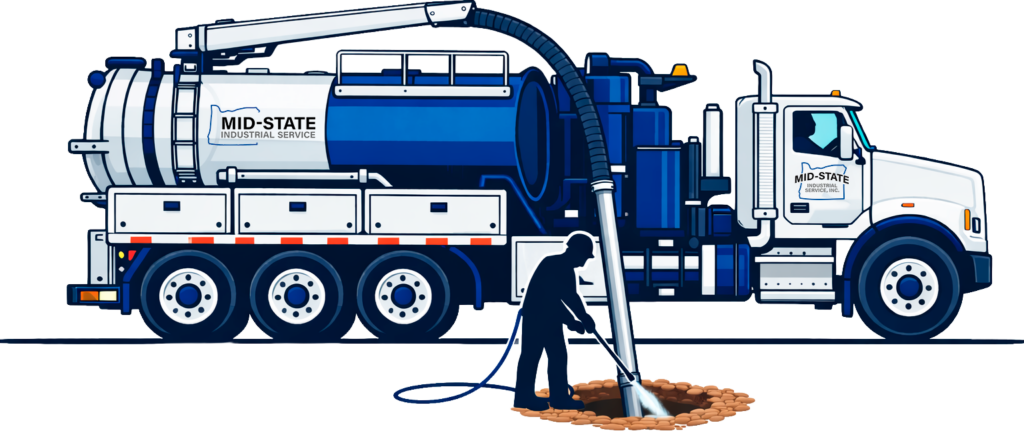
Mid-State operates Vactor HXX and appropriately configured Vactor 2100 units for controlled hydro excavation, utility daylighting, potholing, slurry recovery, and underground infrastructure support.
- Controlled water pressure loosens compacted soil around marked utilities and subsurface structures.
- Industrial vacuum systems recover slurry, loosened soil, and accepted material from the excavation area.
- The equipment configuration supports utility daylighting, potholing, slot trenching & limited-access excavation.
- Adjustable operating methods help reduce direct mechanical contact with buried gas, electrical, telecom, fiber optic, water, and stormwater infrastructure.
- Utility, municipal, construction, roadway & industrial project support is available throughout Oregon.
Best for: Utility daylighting, potholing, slot trenching, crossing verification, controlled excavation, slurry recovery, limited-access work, and underground-infrastructure projects.
Service Areas
Mid-State Industrial Service provides hydro excavation, utility daylighting, and potholing throughout Oregon. Crews and equipment can also mobilize for select projects in Southern Washington, Western Idaho, and Northern California.
Portland Metro
Multnomah, Washington & Clackamas counties.
Salem & Mid-Willamette Valley
Marion, Polk & surrounding counties.
Eugene & Springfield
Lane County & surrounding areas.
Bend & Central Oregon
Deschutes County & Central Oregon communities.
Roseburg & Southern Oregon
Douglas, Jackson, Josephine & surrounding counties.
Eastern Oregon
Mobilization available for utility, municipal, construction, roadway & industrial projects throughout Eastern Oregon.
Call (541) 726-6730 to discuss your project location, utility-locate status, excavation depth, soil conditions, access, slurry handling, and scheduling needs.
Frequently Asked Questions
What is hydro excavation?
Hydro excavation is a controlled digging method that uses pressurized water to loosen soil and industrial vacuum equipment to remove the resulting slurry. It is commonly used in Oregon for utility daylighting, potholing, slot trenching, and excavation near marked underground infrastructure because it reduces direct mechanical contact with buried lines.
Is hydro excavation required near utilities?
Hydro excavation is not required for every project, but utility owners, municipalities, engineers, and project specifications may require potholing or controlled utility exposure within designated tolerance zones. The excavator should confirm Oregon 811 requirements, utility-owner instructions, and project specifications before work begins.
How deep can you excavate with hydro excavation?
Hydro excavation depth depends on soil type, utility location, excavation diameter, hose reach, groundwater, access, equipment configuration, and whether workers must enter the excavation. Deeper excavations may also require protective systems, competent-person inspections, access controls, and other OSHA excavation precautions. Contact Mid-State with the expected depth and site conditions for a project-specific assessment.
Do you remove the spoil from the site?
Yes. Hydro excavation slurry and spoil are recovered into the truck and can be transported to an approved receiving location or discharged at an authorized onsite location when the material, access, customer instructions, and disposal requirements allow. Suspected contamination may require testing, profiling, or additional disposal approval.
Do I need an Oregon 811 locate before hydro excavation?
In most excavation situations, the excavator must submit an Oregon 811 locate request and wait for the required utility responses before digging begins. Hydro excavation is used after the locate process to expose and verify marked utilities, because surface markings do not confirm exact depth. The party responsible for the locate request and on-site markings should be confirmed when the work is scheduled.
Does Mid-State bring the water used for hydro excavation?
Water requirements depend on the project, soil conditions, excavation volume, and equipment assigned. Mid-State can review whether water will be supplied by the truck, obtained from an approved on-site source, or coordinated separately before the job is scheduled.
Does hydro excavation reduce damage to pavement and landscaping?
Hydro excavation creates a controlled excavation area and can reduce unnecessary disturbance around pavement, curbs, sidewalks, landscaping, and finished surfaces. Some restoration may still be required depending on the opening size, depth, soil conditions, project scope, and final repair requirements.
Safe Around Lines. Tough on Soil.
Locate first. Daylight next. Dig with greater confidence.
24/7 emergency dispatch available; statewide coverage across Oregon.