
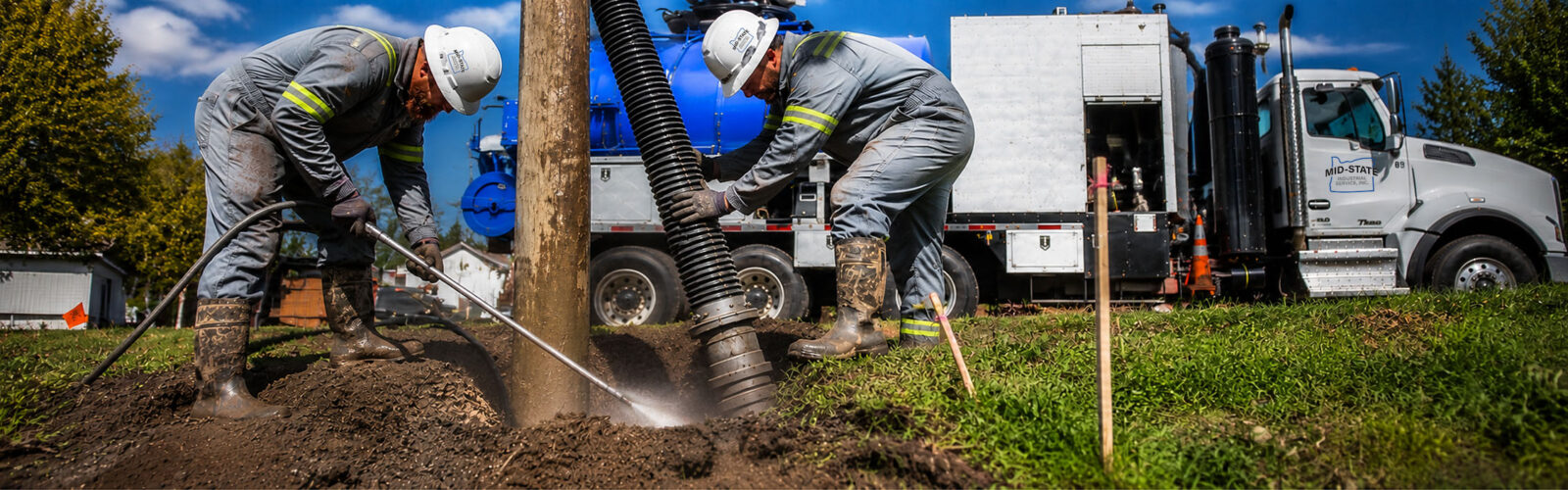
What hydro excavation is (and why it’s different)
Hydro excavation uses pressurized water to loosen soil and a high-powered vacuum to remove the slurry into a debris tank. Instead of tearing through the ground with steel teeth, you’re using controlled water and suction to expose what’s actually there.
In practical terms, it’s a way to dig precisely around:
- Fiber and telecom
- Gas
- Sewer & storm
- Electrical
- Unknown or unmarked lines
When Oregon contractors choose hydro excavation
Hydro excavation isn’t “only for emergencies.” It’s often the fastest path to a clean, safe locate—especially when the cost of being wrong is high.
Common use cases we see across Oregon:
- Potholing/daylighting before directional drilling
- Verifying depth and alignment when as-builts don’t match the field
- Working in congested corridors (downtown streets, industrial zones, tight easements)
- Cold-weather digging when the ground is hard and mechanical excavation slows down
- Sensitive areas where you want minimal surface disruption
Why it reduces risk (safety + schedule)
Hydro excavation helps reduce:
- Utility strikes and the downstream paperwork, repairs, and delays
- Over-excavation (and the backfill/compaction time that comes with it)
- Traffic impacts (less time open, less disruption)
- Rework caused by “close enough” guesses
It also supports safer work planning because you can confirm what’s in the ground before you commit equipment and crews to the full excavation.
What to expect on a hydro excavation job
A professional hydro excavation job should feel controlled and methodical—not rushed.
Typical steps:
- Locate review and site walk (what’s marked, what’s not, what’s questionable)
- Set up for safe access (traffic control considerations, safe staging)
- Targeted excavation to daylight utilities with minimal disturbance
- Spoils management (vacuumed material contained in the truck)
- Clean finish so your crew can measure, verify, and proceed
Where this matters most in Oregon
Hydro excavation is especially valuable in:
- Portland metro: dense utilities, traffic constraints, tight work windows
- Salem: municipal corridors and mixed-use development
- Eugene/Springfield: utility upgrades, campus/industrial projects
- Bend/Redmond: fast-growing infrastructure and new construction
- Medford/Rogue Valley: roadway and utility work with variable soils
And if your project isn’t in a major city: Mid-State Industrial Service supports statewide Oregon work—so you can standardize one approach across multiple regions.
The bottom line
If your project depends on accurate locates and controlled exposure, hydro excavation is one of the most practical ways to protect your schedule.
Need hydro- or vacuum-excavation support in Oregon? Call (541) 726-6730 or complete the Request a Quote form on our website.