
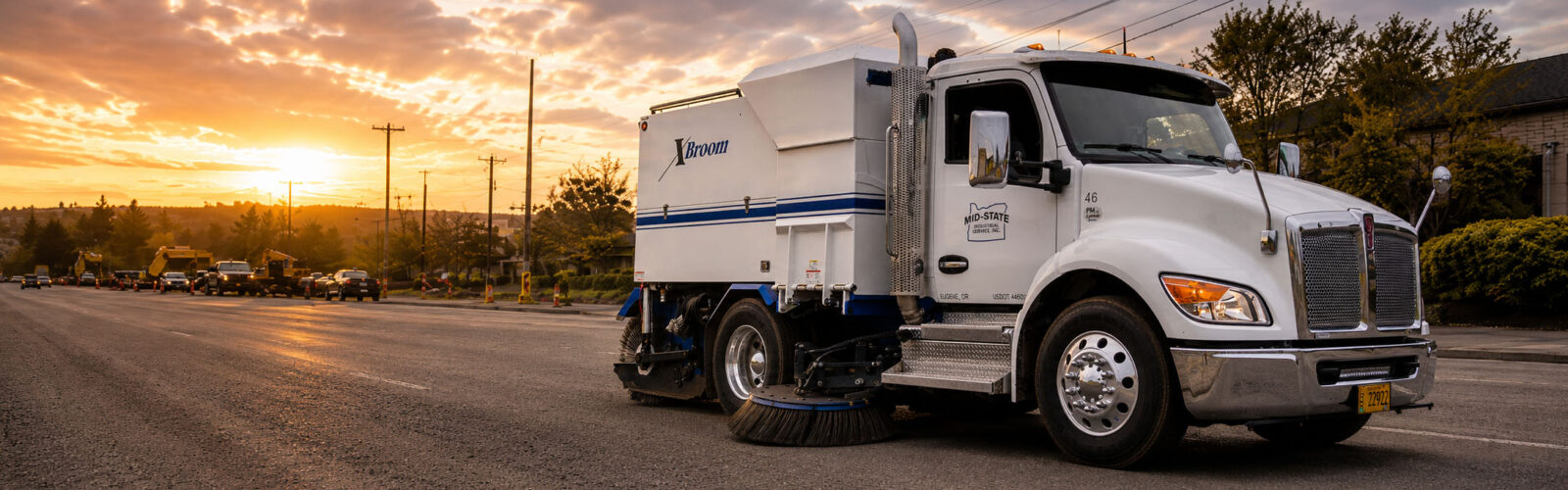
Roadway milling & grinding move fast. Cleanup has to keep pace.
On Oregon roadway projects, asphalt millings, fines, dust, and loose debris can quickly create problems for production, public safety, and stormwater protection. When material spreads across the work zone or into public traffic areas, it can create complaints, rework, delays, and added pressure from inspectors or project owners.
Mid-State Industrial Service, Inc. supports roadway contractors across Oregon with professional sweeping during milling, grinding, and paving operations. We coordinate with prime contractors, paving crews, milling contractors, municipalities, counties, and state project teams to help control loose roadway material, protect drainage areas, and keep paving schedules moving.
Statewide roadway sweeping support
Mid-State provides roadway milling and grinding cleanup support across Oregon, including:
- Portland Metro, including Portland, Hillsboro, Beaverton, and Gresham
- Willamette Valley, including Salem, Albany, Corvallis, and Eugene/Springfield
- Central Oregon, including Bend and Redmond
- Southern Oregon, including Roseburg, Grants Pass, and Medford
- Oregon Coast and surrounding regions
If your roadway project is outside these areas, call us. We routinely mobilize statewide.
Why milling & grinding cleanup matters
When asphalt is milled or ground, the process leaves behind more than just large pieces of material. Roadway crews often deal with coarse millings, fine particulate matter and dust, and loose debris that collects along curb lines, shoulders, bike lanes, intersections, and near storm drain inlets.
If that material is not controlled, it creates real jobsite and public roadway problems:
- Reduced traction for vehicles, cyclists, and crews
- Dust and visibility concerns
- Sediment reaching drainage structures
- Cleanup delays between milling and paving
- Added rework before final paving, striping, or project closeout
Stormwater considerations
Fines and sediment left on paved surfaces can become a stormwater liability once rain, runoff, or traffic begins moving that material. Sweeping is one of the most practical ways to reduce that risk. On projects operating under a Stormwater Pollution Prevention Plan (SWMP), sweeping supports the intent of sediment control and inlet protection measures by keeping paved surfaces and drainage areas cleaner throughout the work.
Common problem areas on milling & paving projects
On milling and paving projects, cleanup problems usually develop where traffic, equipment movement, runoff, and tight access overlap.
Intersections and approaches where traffic, equipment, and haul trucks overlap
Curb lines and gutter lines where fines and millings collect quickly
Bike lanes and shoulders where debris can create safety concerns
Storm drain inlets and catch basins where sediment can enter the drainage system
Transitions and tapers between milled and unmilled surfaces
Bridge decks and tight work zones where cleanup access can be limited
Night work areas where speed matters and missed debris is harder to see
Mid-State focuses on these areas so that roadway crews can stay ahead of cleanup rather than react after problems develop.
How Mid-State supports roadway milling & grinding cleanup
Our sweeping support is built around real paving schedules, tight work windows, and active roadway conditions.
1. Pre-sweeping before milling
Before milling begins, we can sweep the work area, shoulders, curb lines, and approaches to remove loose material that could interfere with production or mix into fresh milling debris.
2. Sweeping during milling & grinding
As milling progresses, our sweepers help keep loose debris under control and reduce the amount of material that migrates outside the active milling area.
3. Cleanup after milling pickup
After millings are loaded and removed, we provide follow-up sweeping to clean areas that typically need a second pass, including edges, transitions, intersections, bridge decks, and drainage-sensitive locations.
4. Sweeping ahead of paving
A cleaner surface helps paving crews stay productive and reduces the chance of loose debris affecting the next phase of work. Mid-State can coordinate sweeping ahead of paving operations so the roadway is ready when crews arrive.
Built for Oregon roadway contractors
Mid-State has served Oregon for more than 55 years, and we understand what roadway contractors need from a sweeping partner:
- Reliable scheduling and communication
- Coordination with milling, grinding, paving, and traffic control crews
- Equipment and operators that can keep up with production
- Statewide mobilization
- 24/7/365 availability for night work and tight project windows
- Experience working around active roadways, lane closures, and public traffic
Whether you need sweeping during milling, cleanup after grinding, or support ahead of paving, Mid-State can help keep the job moving.
Frequently asked questions
In most cases, yes. Milling generates coarse millings, fines, and dust that can accumulate in lanes, shoulders, curb lines, bike lanes, and near drainage inlets. Sweeping keeps that material under control as work progresses.
Yes. Mid-State provides 24/7/365 availability and can coordinate sweeping around milling, grinding, and paving schedules, including night work.
Sweeping helps reduce loose sediment and debris on paved surfaces, especially near curb lines, gutters, and storm drain inlets. This can support the intent of SWPPP, sediment control, and inlet protection measures. If stormwater compliance is a project requirement, discuss your specific SWPPP obligations with your engineer or project owner.
Get roadway sweeping support for your next paving project
If you are planning roadway milling, grinding, or paving work in Oregon, Mid-State Industrial Service, Inc. can help keep the work zone clean, protect drainage areas, and support your production schedule.
Call Mid-State Industrial Service, Inc. at (541) 726-6730 or Request a Quote for scheduling and availability.
We Handle The Dirty Work, So You Don’t Have To.