Every year, the same scenario plays out at facilities across the Willamette Valley: harvest season arrives, production ramps up, and a drain backs up, a tank needs an unplanned clean, or a stormwater issue surfaces at the worst possible moment.
The fix is rarely complicated. The timing is what makes it costly.
Mid-State Industrial Service has worked with industrial and processing facilities across Oregon for 55+ years. Here is what we see: the facilities that schedule maintenance before peak season have fewer emergencies, less downtime, and better compliance outcomes than those that wait.
Three services beverage facilities need most
1. Hydroblasting for tanks, vats, & process equipment
Wineries, breweries, and beverage processors rely on tanks, fermentation vessels, heat exchangers, and process lines that need thorough cleaning between production runs. Chemical cleaning has limitations: residue concerns, disposal requirements, and surfaces that chemicals cannot effectively reach.
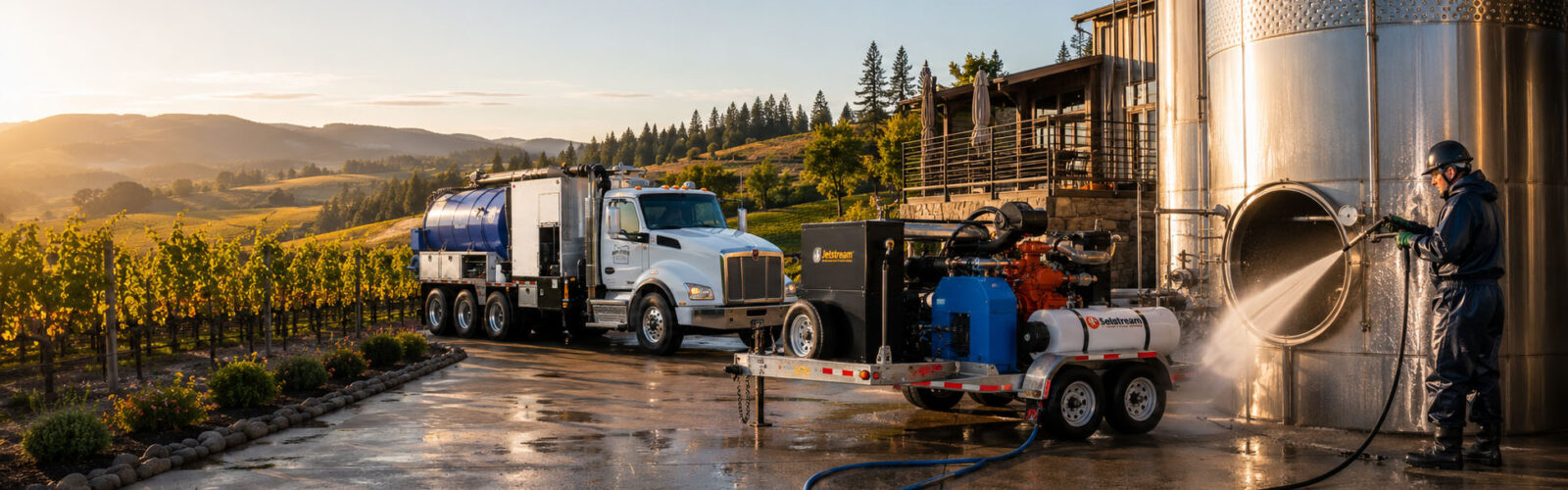
Hydroblasting uses high-pressure water to remove buildup from tanks, vats, condensers, and pipework without harsh chemicals. It is environmentally responsible, effective on hard-to-reach surfaces, and can be performed in confined spaces with properly trained crews.
For food and beverage facilities, this means no chemical residue, no risk of secondary contamination, and a clean that meets the standard your production requires.
2. Drain line jetting for process drains & lines
Production drains in beverage facilities accumulate sediment, grease, yeast, hop residue, and organic buildup over time. The failure mode is gradual. Drains slowly, then backs up, then becomes an emergency during the worst possible week.
High-pressure drain line jetting removes this buildup before it becomes a problem. A scheduled jetting program, timed around your production calendar, keeps drains flowing and reduces the risk of backups during peak runs.
3. Catch basin & storm drain cleaning for yard drainage
Outdoor production yards, loading areas, and processing facilities generate sediment and debris that accumulate in catch basins and storm drains. Left unmanaged, this leads to standing water, backups, and stormwater compliance issues under EPA/NPDES requirements.
Routine catch basin cleaning removes sediment, debris, and pollutants before they cause problems, protecting your facility’s drainage systems and keeping you on the right side of stormwater regulations.
The case for scheduling now
Pre-harvest maintenance windows in July and August fill up quickly. Post-harvest windows in October and November are similarly constrained as facilities across the region schedule cleaning at the same time.
Facilities that plan ahead get the scheduling flexibility they need. Those who wait often find themselves competing for limited availability during the exact weeks they need service most.
If you want a maintenance window on the calendar before harvest, April is the right time to plan it.
Serving Oregon’s beverage industry statewide
Mid-State Industrial operates more than two dozen specialized trucks from our Eugene, OR base, with statewide coverage across the Willamette Valley, Portland Metro, Southern Oregon, and Central Oregon. We offer 24/7 emergency response, but our goal is always to help facilities avoid emergencies in the first place.
To schedule a site assessment or discuss a maintenance program for your facility, call (541) 726-6730 or complete the Request a Quote form on our website.