Tank Cleaning That Meets Industrial Standards and Safety Requirements
Storage tanks, process vessels, and holding systems accumulate sludge, scale, sediment, and residue over time. Left unaddressed, buildup reduces capacity, accelerates corrosion, contaminates product, and creates compliance and safety risks.
Industrial tank cleaning requires specialized equipment, trained confined-space personnel, and strict adherence to OSHA safety procedures. Cleaning operations must be coordinated carefully to manage atmospheric hazards, waste handling, facility access, and operational downtime safely and efficiently.
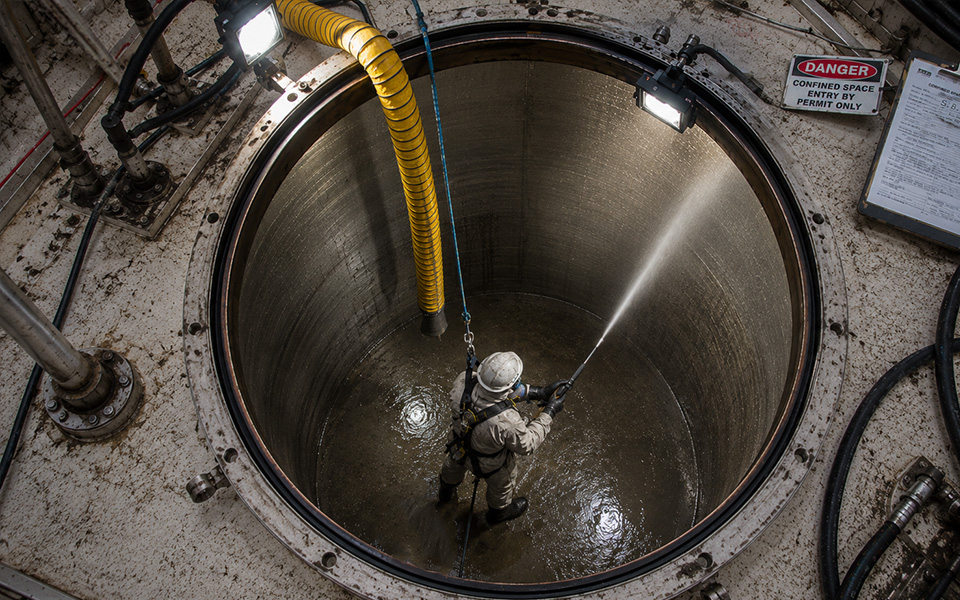
Our Tank Cleaning Process
Mid-State combines industrial vacuum trucks, hydroblasting systems, and tanker equipment for sludge removal, confined space cleaning, industrial tank maintenance, and waste recovery operations.
Pre-Job Assessment
We evaluate tank contents, access points, confined-space classification, cleaning requirements, and waste-handling considerations before work begins.
Detailed Proposal
You receive a clear scope of work, scheduling plan, and cost estimate before mobilization.
Safe Entry Setup
Confined space permits, atmospheric testing, site safety controls, and entry procedures are established before cleaning begins.
Tank Cleaning
Ludge, residue, sediment, and buildup are removed using vacuum extraction, hydroblasting, or a combination of cleaning methods, selected based on the tank contents, configuration, and cleaning requirements.
Waste Handling
Collected liquids, sludge, sediment, and removed material are managed in accordance with Oregon DEQ requirements and, when applicable, transported to approved disposal or processing facilities. For materials requiring additional characterization or special handling, Mid-State coordinates with approved waste management and disposal partners.
Post-Cleaning Verification
Final inspection confirms cleaning results, tank condition, and readiness before the system is returned to operational service.
What Tank Cleaning Addresses
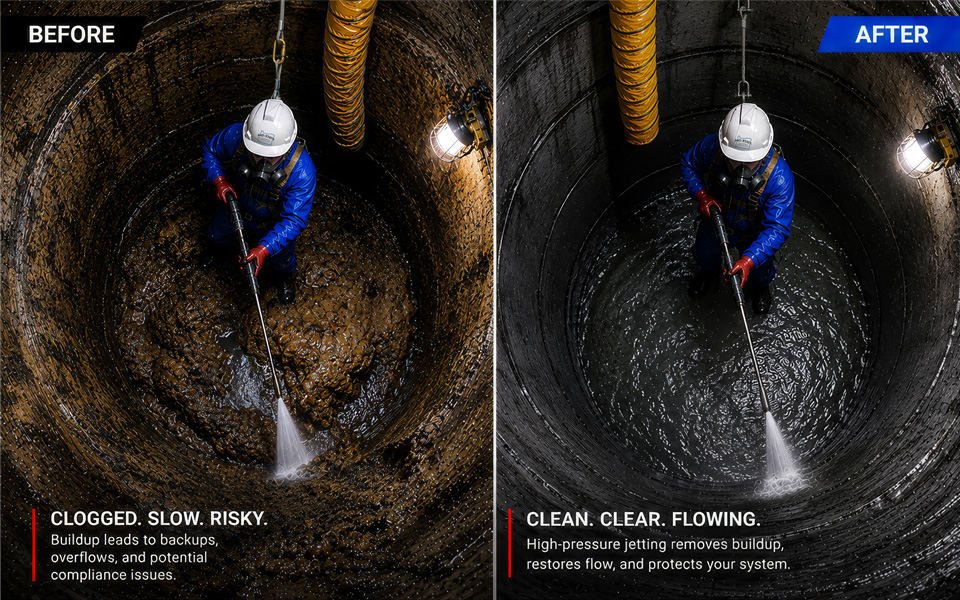
Tank interiors accumulate a range of materials depending on what’s stored and how long it’s been since the last cleaning:
- Sludge and sediment – settled solids that reduce usable capacity and degrade product quality
- Scale and mineral deposits – calcium, silica, and process-related buildup on tank walls and floors
- Hydrocarbon residue – petroleum products and oils that coat surfaces and create contamination risk
- Biological growth – algae, bacteria, and biofilm in water storage and process systems
- Corrosion and oxidation buildup – rust, scale, and deteriorated material that can impact tank integrity and inspection visibility
- Product contamination and odor issues – residue accumulation that impacts storage quality and system performance
Who We Serve
We provide tank cleaning services for:
Petroleum Storage & Distribution Facilities
Crude oil, fuel, and lubricant storage tanks
Food & Beverage Processing Operations
Ingredient tanks, fermentation vessels, and process holding tanks
Water & Wastewater Treatment Facilities
Clarifiers, digesters, and storage reservoirs
Chemical Processing & Manufacturing Plants
Process vessels, reaction tanks, and storage systems
Industrial Facilities
Coolant tanks, wash systems, and process fluid storage
Agricultural Operations
Liquid fertilizer and chemical storage tanks
Wood Products & Sawmills
Resin buildup, process residue, storage systems, and wastewater-related tanks
Wineries, Breweries, & Beverage Facilities
Fermentation vessels, process tanks, trench systems, and seasonal maintenance cleaning
Many facilities combine tank cleaning with hydroblasting, vacuum recovery, drain line jetting, & wastewater system cleaning during planned maintenance shutdowns & seasonal service periods. As a result, multiple services can be completed during a single coordinated mobilization.
Confined Space Entry Capable
All confined-space tank-cleaning work follows Oregon OSHA confined-space entry requirements (OAR 437) and federal OSHA 29 CFR 1910.146 procedures for permit-required confined spaces.
Many of the systems that require tank cleaning, including storage tanks, process vessels, digesters, reservoirs, and enclosed industrial systems, are classified as permit-required confined spaces under OSHA 29 CFR 1910.146.
Mid-State’s crews are trained and equipped to safely perform cleaning operations inside these confined-space environments. Personnel maintain confined-space safety training applicable to industrial tank cleaning and vessel entry operations, including D2000 confined-space training where required.
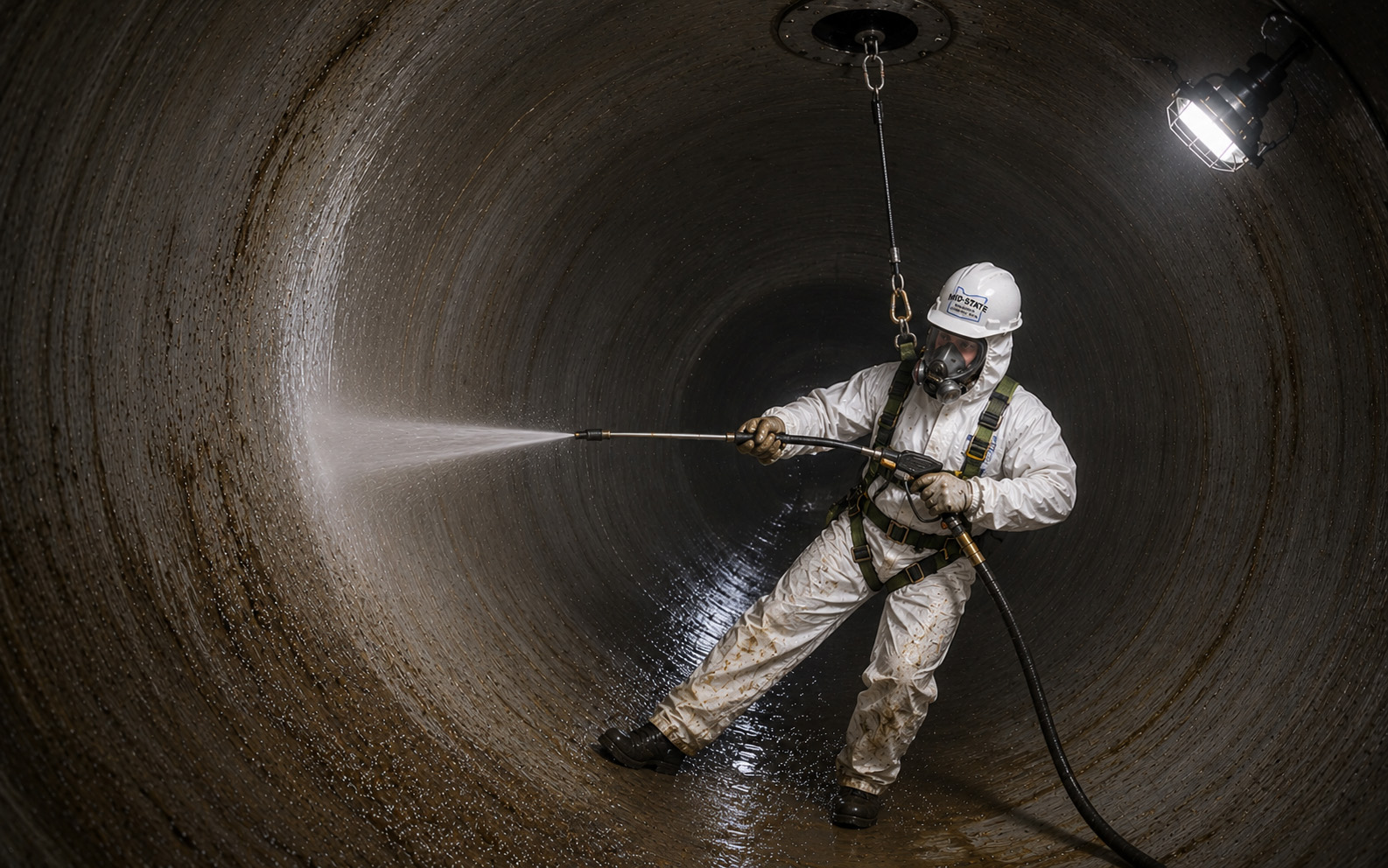
Mid-State’s operators are trained in confined space entry procedures, including:
- Pre-entry atmospheric testing – oxygen levels, flammable gas, and toxic vapor monitoring
- Permit-required confined space entry protocols – entry permits, attendant procedures, and rescue planning
- Continuous atmospheric monitoring – throughout the duration of work inside the tank
- Emergency rescue procedures – trained and equipped for non-entry rescue
Industrial tank cleaning requires more than vacuum equipment alone. It requires trained personnel, documented safety procedures, atmospheric monitoring, and coordination with facility operations and shutdown schedules.
Why Mid-State Industrial
Confined Space Entry Trained
Trained and equipped to perform tank cleaning inside permit-required confined spaces following OSHA 29 CFR 1910.146 compliant procedures.
High-Capacity Vacuum Trucks
Industrial vacuum equipment capable of removing heavy sludge, sediment, liquid waste, and accumulated material from tanks, pits, and process systems.
Hydroblasting Capability
High-pressure hydroblasting services for tanks requiring the removal of hardened buildup, scale, coatings, residues, and process materials.
Shutdown & Maintenance Coordination
Experienced in working around planned outages, turnarounds, maintenance schedules, and active industrial operations.
24/7/365 Availability
Responsive emergency tank cleaning services for unplanned shutdowns, contamination issues, overflows, and critical maintenance situations.
Statewide Coverage
Serving industrial facilities, processing plants, mills, municipalities, and tank systems across Oregon.
Integrated Industrial Cleaning Services
Tank cleaning, hydroblasting, vacuum recovery, drain cleaning, and waste handling through one contractor.
Service Areas
Mid-State Industrial provides tank cleaning services throughout Oregon and the surrounding region, with the ability to dispatch crews and equipment into Southwest Washington, Western Idaho, Northern California, and surrounding service areas as needed.
Portland Metro
Multnomah, Washington, and Clackamas Counties
Salem & Mid-Willamette Valley
Marion, Polk & surrounding counties
Eugene & Springfield
Lane County & surrounding areas
Bend & Central Oregon
Deschutes County & Central Oregon communities
Roseburg & Southern Oregon
Douglas, Jackson, Josephine & surrounding counties
Eastern Oregon
Statewide dispatch available upon request
Not sure if we cover your area? Call us. We likely do. (541) 726-6730
Frequently Asked Questions
How often should industrial tanks be cleaned?
It depends on what’s stored, regulatory requirements, and your facility’s maintenance program. Many facilities clean tanks annually or during planned turnarounds. We can help you assess your cleaning interval based on tank type and contents.
Can you handle tanks with hazardous contents?
Contact us to discuss your specific situation. We assess each job individually and will be upfront about what we can and can’t safely handle.
Do you handle waste disposal after cleaning?
Yes. Collected sludge, sediment, and liquid waste are managed and disposed of in compliance with Oregon DEQ requirements. We handle the waste stream from start to finish.
How far in advance should I schedule tank cleaning?
For planned shutdowns and turnarounds, we recommend scheduling as early as possible. Shutdown windows are limited and fill up quickly. For emergency situations, we’re available 24/7.
Can you coordinate tank cleaning during shutdowns or maintenance outages?
Yes. We regularly perform tank cleaning during planned shutdowns, turnarounds, and maintenance outages to help facilities minimize downtime and return systems to service safely and efficiently.
Safe, Compliant Tank Cleaning For Demanding Industrial Environments.
Scheduled turnaround? Tank overdue for cleaning? Don’t wait until it’s a problem.
24/7 emergency dispatch available, statewide coverage across Oregon.