Track-out isn’t just an eyesore. It’s a compliance risk that can lead to complaints, inspections, delays, and added cleanup costs.
It starts with a few tire marks on the public road. Then a neighbor complained. Then a call from the inspector.
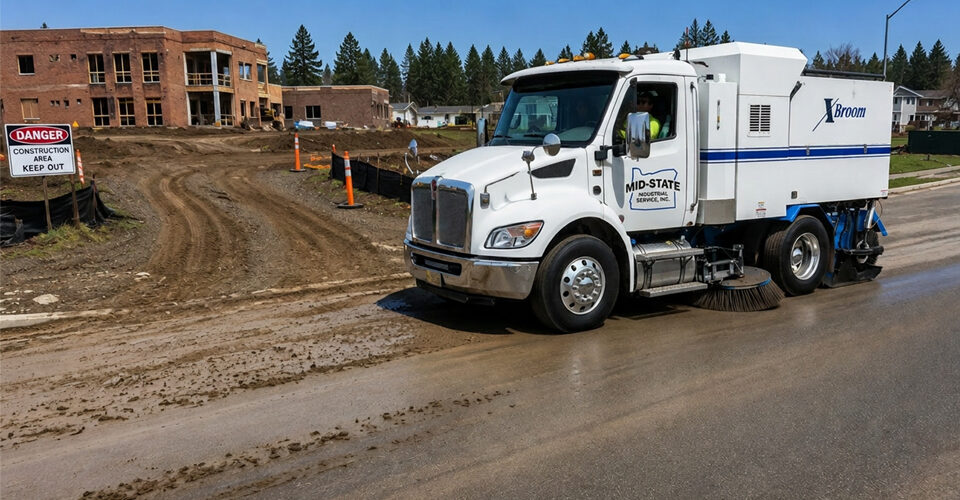
Track-out, the mud, gravel, sediment, and debris that construction vehicles drag from a job site onto public roads, can become a serious problem quickly. For Oregon contractors, developers, municipalities, and site supervisors, uncontrolled track-out can create safety concerns, stormwater issues, public complaints, and Stormwater Pollution Prevention Plan (SWMP), putting the project schedule at risk.
The good news is that track-out is one of the easiest construction-site problems to control when sweeping is built into the job plan early on.
Why track-out becomes a bigger problem than it looks
At first, track-out may not seem like a major issue. A few muddy tire marks or loose gravel near the site entrance can feel like normal construction activity.
But once that material reaches a public street, curb line, gutter, bike lane, or storm drain inlet, the risk changes. Sediment and debris can spread quickly with traffic, rain, and daily equipment movement.
Uncontrolled track-out can lead to:
- Complaints from nearby businesses, residents, or property owners
- Inspector attention and corrective action requirements
- Sediment reaching storm drains or catch basins
- Rework before inspections, paving, or project closeout
- Safety concerns for drivers, cyclists, pedestrians, and crews
- Delays that cost more than routine cleanup would have
Most site supervisors already know track-out is a problem. What often gets underestimated is how fast it escalates once material leaves the job site.
What can track-out cost your project?
The cost of track-out is rarely just the cost of cleaning the road.
A single complaint or inspection finding can create added pressure on your schedule, your crew, and your documentation. Corrective action, re-inspection, emergency cleanup, and downtime can all cost more than a scheduled sweeping program.
For active construction sites, the real cost often shows up in three places:
1. Compliance risk
Track-out can create stormwater and erosion control concerns, especially when sediment reaches paved surfaces, gutters, storm drains, or nearby drainage areas. If your project is operating under a SWPPP or other site-specific erosion control requirements, visible track-out can become an easy inspection issue.
2. Schedule disruption
Cleanup becomes more expensive when it turns into an emergency. If a project has to stop, slow down, or shift crews because public roads require immediate cleanup, the impact can extend far beyond the cost of sweeping.
3. Public complaints
Track-out is visible. Neighbors, property owners, inspectors, municipalities, and project owners can all see it. Once complaints begin, the job often receives more attention, more scrutiny, and less flexibility.
Where does track-out usually start
Track-out problems usually develop where heavy equipment, haul trucks, soil, and traffic all meet.
Common problem areas include:
- Construction site entrances and exits
- Haul roads and access roads
- Staging areas and loading zones
- Curb lines and gutter lines near the project
- Intersections close to site access points
- Storm drain inlets and catch basins
- Areas where trucks move from unpaved surfaces to public pavement
These are the areas where regular construction sweeping can make the biggest difference.
Why does routine construction sweeping work
Routine construction site sweeping removes mud, gravel, sediment, and debris before they spread across the public roadway or reach drainage areas.
Instead of waiting until track-out becomes a complaint, sweeping keeps the problem under control as the job progresses. This helps contractors maintain cleaner access points, reduce stormwater risk, and show that the site is being actively managed.
Scheduled sweeping can support:
- Cleaner public roads around the project
- Better SWPPP and erosion control housekeeping
- Fewer complaints from neighbors and property owners
- Reduced sediment buildup near storm drains
- Safer access for trucks, crews, and public traffic
- Faster response when site conditions change
For many jobs, the best approach is not a one-time cleanup. It is a planned sweeping schedule that matches the project phase, weather conditions, haul traffic, and inspection expectations.
How Mid-State supports Oregon construction sites
Mid-State Industrial Service provides construction site sweeping for contractors, developers, municipalities, and project owners across Oregon.
Our crews support active jobsites with sweeping for:
- Track-out control
- Haul roads and access roads
- Site entrances and exits
- Curb lines and gutters
- Public roadways near construction activity
- Storm drain and catch basin areas
- Cleanup before inspections or project closeout
We operate purpose-built sweeping equipment designed for active construction environments, including heavy debris, sediment, gravel, and roadway material. Our team understands that construction cleanup must accommodate production schedules, traffic control, weather, and tight project timelines.
When to schedule sweeping
The best time to schedule sweeping is before track-out becomes visible enough to trigger complaints.
Construction sites should consider scheduled sweeping when:
- Site access connects directly to a public road
- Trucks are moving soil, aggregate, millings, or jobsite material
- Rain is expected
- The project has active erosion control or SWPPP requirements
- Inspectors, municipalities, or project owners are monitoring site conditions
- Nearby businesses, neighborhoods, or public facilities may be affected
- Paving, striping, inspection, or closeout work is approaching
If conditions change quickly, Mid-State also provides 24/7 emergency dispatch availability.
Keep your site clean, compliant, and moving
Track-out is easy to ignore until it becomes expensive. Once mud, gravel, sediment, and debris leave the construction site, the risk moves onto the public road, into the drainage system, and onto the inspector’s checklist.
Mid-State Industrial Service helps Oregon contractors stay ahead of track-out with professional construction site sweeping, responsive scheduling, and statewide service coverage.
If your project is ramping up, now is the time to get sweeping on the schedule.
Call Mid-State Industrial Service at (541) 726-6730 or complete the Request a Quote form on our website.